Abigail Welborn
Menu
  • Home
  • Posts
Menu

Category: Craft

Five Stages of (Self-)Editing (PNWA 2015 Session Round-up)

Posted on January 29, 2016 by Abigail Welborn

Every writer has to self-edit, even if it’s only to get your work in shape to send to beta readers and agents. There are many resources out there for what to look for when editing (my latest fave), but very little about how to go about doing so effectively. If you’re looking for the latter, here’s a great process to follow!

The very last session I attended at the PNWA 2015 Conference was Saturday at 4 pm, taught by AC Fuller. At the end, he admitted that he’d expected the session to drag, as I had when I started. (I was on my third cup of tea and had woken up early for three straight days to get to the conference, so I was practically sleeping on my feet.) To the surprise of teacher and students alike, it was one of the most energetic sessions I attended all conference! AC was a great teacher, straight to the point and with enough humor to remind us that he’s been there, too. (Note: You can listen to the whole talk if you want to!)

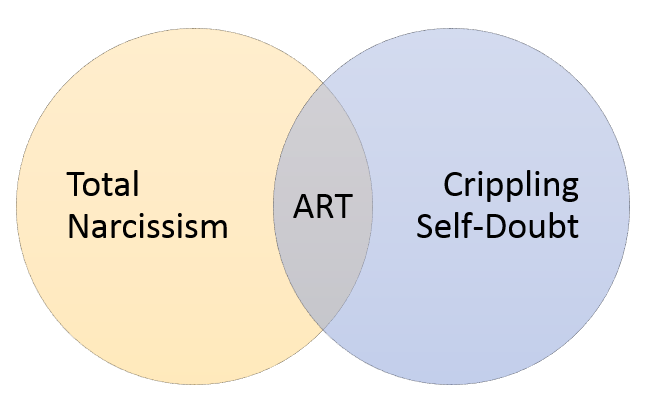
He started with this great reminder about why the self-editing process is hard:
ART

Then he set out to give us “a process to take our rough draft to the point of showing to agents or hiring a professional editor.” Of course, everyone has their own process, but I definitely plan to try this out, as it seems eminently usable and adaptable.

Foes of Editing

  1. Procrastination.
  2. The Inner Critic.

Why do we procrastinate? To avoid pain. Either we don’t want to admit that our writing is garbage, or we’re writing about something painful – or both! Well, your writing does need help, so you might as well get down to it. Hopefully with a process to follow, editing will seem less painful. For #2, try to redirect your Inner Critic to fix problems instead of making value judgments. Practice makes perfect!

Stages of Editing

  1. Relax until you don’t hate the sight of your manuscript. Go on vacation. Brainstorm another novel. Clean all the rooms in your house that went untouched while you were drafting. Give it at least a week.
  2. Read your manuscript. Actually read the whole thing. Try it in a different format, preferably one that’s hard to edit (print and bind it, or send it to your favorite e-reader). Figure out what you were trying to say (theme, character arc, etc.).
  3. Restructure. This time when you read it, write down every change you want to make (in another notebook or document referencing scenes or chapters, not page numbers). Don’t make any changes yet! These changes can be anything from “Look up whether they had longbows in 1204 AD” to “So-and-so is a lame character and we need to make him cooler.” Then, and this was the big one for me, order and categorize all of those changes, from largest to smallest. No sense polishing the prose in a scene you’re going to delete! Go through the changes, starting with the largest, and fix your manuscript one note at a time. Repeat until you get to the bottom of the list.
  4. Rewrite. Maybe, if your prose is pretty good, you can give it to beta readers before step 4 to double-check your structure. [I do this by sending an outline to beta readers, but I usually write the outline after steps 1-3. 🙂 –Ed.] Return to step 1 until you’re happy with the story.
  5. Refine. These are the miniscule corrections – copyediting and perfecting your prose – that you want to do before showing to editors and agents. Repeat this step until it’s perfect. 😉

I can’t wait to attack my WIP with this process!

MG or YA? How do you know? (PNWA 2015 session round-up)

Posted on September 15, 2015September 15, 2015 by Abigail Welborn

Saturday morning, the last main day of the conference, was the earliest start time of all—8 am! Attendance at all the first sessions was pretty light, but we had a great time at the “Elements of Young Adult and Middle Grade,” a panel discussion with two authors (Janet Lee Carey and Brian Mercer) and two agents (Roseanne Wells and Shannon Hassan). After we woke up a bit, anyway. 🙂

We started off with the very basic question: okay, how do you differentiate Middle Grade from Young Adult, both of which used to be lumped together with “children’s”? The answer has a lot of nuance, but also some pretty basic differences.

Middle Grade Young Adult
Length of book 30-50K words 50-70K words (speculative fiction on the longer end; an established series writes its own rules)
Age of reader 8-12 years 13-18
Age of main character (readers tend to “read up”) 10-13 14-18
Life stage Lots of time at school, still “ruled by adults,” highly involved with family of origin Especially with older characters, getting ready to leave home, dealing with authority, open to romance and sex
Main character arc (not the only one, obviously) Mostly external, sense of going out into the world and righting a wrong Mostly internal, finding an identity, purpose and place in the world

Then we talked about one of the sticky questions: what’s acceptable for sex in YA? The older the main character, the fewer restrictions; there are huge differences between 14- and 18-year-olds, both as readers and as characters. Some publishing houses have specific guidelines, and agents often defer to them. You can make a book feel intense without being explicit (e.g., Speak). MG books are much more sensitive to language, violence and sex because parents are still the main gatekeepers of what their kids read.

Finally we talked about voice, and how it can’t be “taught” but you can pick up an ear by listening to kids and reading popular books. First person is obviously very popular in YA, but if it’s bogging down your narrative, don’t be afraid to do something else. Always do what’s best for your story.

Writing Active Setting (PNWA 2015 session round-up)

Posted on July 28, 2015 by Abigail Welborn

(I’ll be doing a series of posts with the highlights of what I learned from various sessions at the 2015 PNWA Conference. This is the first!)

The very first session I attended was “Writing Active Setting,” presented by Mary Buckham. She said many writers have one of two issues with setting in their story:

  1. They have none, so the reader is lost; or
  2. They have too much, and it stops the flow of the story.

“Active setting,” then, is using your description of setting to do double or even triple duty—not just to describe time and place, but also to show character, emotion, or backstory; to evoke emotion; or to orient the reader. (I don’t want to steal all her thunder; she has a series of short books that might soon become one longer book about active setting: http://marybuckham.com/writing-craft/.) Know when readers accept having more setting and utilize that (at the beginning of the story, scene or chapter).

Mary has a great, dry sense of humor, and her workshop was packed with great examples. Here are a few:

  • Do you say, “It was dark. She was scared about meeting the vampires,” or “The grapevines along the side of the road hung like dead men on their trellises”? (I might not be remembering the exact words, because in my notes I only jotted down phrases, but I think you get the intent.)
  • Do you say, “They drove as quickly as traffic would allow” or “Blasting north on the 101”? (The latter gives you insight into the driver’s character, orients you in space, and gives you the hint that we’re on a big freeway — even if you’re not from California, you know that something called just “the 101” is probably not a country back road.)
  • Evoke your character’s mood: “bruise-colored clouds trudging” vs. “cotton clouds waltzing”.
  • Previous
  • 1
  • 2
  • Bluesky
  • Instagram

Latest Thoughts

  • Why We Need WNDB
  • What the world needs now
  • Are you ready to be a mentee?
  • Why Maternal Health Matters to Me (#2)
  • Why Scrivener is great for Nanowrimo

Categories

Word Association

AMM author life bio birth story business of writing caffeinateme career controversies copyedit me craft creative process deadline editing excel formatting freedom goals grammar inspiration LOTR market Mary Pearson meta Microsoft Word Mighty Pens NaNoWriMo never give up panic pitching PitchWars pnwa60 productivity querying retreat retrospective; RevPit Scrivener setting star wars story structure technology the ONE thing treaddesk WNDB word count

Meta

  • Log in
  • Entries feed
  • Comments feed
  • WordPress.org
© 2026 Abigail Welborn | Powered by Minimalist Blog WordPress Theme