Abigail Welborn
Menu
  • Home
  • Posts
Menu

Posts

Why my site is secured even though I’m not a shop

Posted on April 8, 2016 by Abigail Welborn

The short version: you’ll notice that when you navigate to my website now, you will automatically get the https version (in your browser you’ll see something like the green locked padlock below). I don’t sell anything (directly!); the only reason for the secured connection is to keep any Nation State Actors from tracking what you do on this site. 🙂image

The longer version can be found in the DreamHost blog post about how they enabled free security certificates for all their hosting customers! https://www.dreamhost.com/blog/2016/01/20/free-ssltls-certificates-at-dreamhost-with-lets-encrypt/ Like the history in that link mentions, the security certificate doesn’t guarantee anything other than that you are actually connecting with my site, but since the original kerfuffle about trusted authorities happened, it has come to light that there is actually an organization that might be sniffing your browsing history. Now at least they’ll only know you came to my page and not which of my nefarious grammar posts you might have been reading. 🙂

Affect vs. Effect: Grammar Help You Can Remember

Posted on March 22, 2016March 22, 2016 by Abigail Welborn

These two words, affect and effect, cause a great deal of consternation in English, no doubt because they sound similar and each can be either a noun or a verb. The quickest rule of thumb is that, in most cases, you affect something (verb) and cause an effect (noun).

Side note: the noun affect is pronounced AFFect, as opposed to all the other instances of both words, which put the emphasis on the second syllable.

Second side note: the less common meaning of the verb affect is to pretend or feign something (as in the example in the link where one can “affect a Southern accent”). I couldn’t fit that into the rhyme. 🙂

Finally, here’s your hopefully memorable quip:

From a cause, an effect, about that there’s no doubt;
And you’re effecting a change if you bring it about.
Affect as a noun is likely not what you meant,
So affect others’ grammar and send this to them.

How to Lower Your Expectations Without Giving Up: A Reframing Exercise

Posted on March 16, 2016 by Abigail Welborn

Buttercup and Westley in the Fire SwampSince having my second baby, I’ve constantly struggled with my frustration at not getting enough done. I’m have more resources than many moms, but I also have overly demanding expectations of myself. When I ran out of resources to throw at the “no time” problem, there was only one thing left to change.

You might have noticed that I’m a tad “all or nothing,” which means that when I have little margin in my life (like now), I am always close to falling into the pit of self-pity. “My life is over, I’ll never have free time again, what was I thinking having kids, when will this get better??” But I didn’t want to allow myself to lower my expectations, because it felt like giving up and admitting that my life was going to be miserable forever.

Of course, it wasn’t true that my whole life was miserable. I was experiencing a moment of misery, as everyone does, but I was letting it derail me. This insight from my counselor helped me believe that my act of acknowledging that every life will occasionally be difficult (in some seasons perhaps more frequently than others) is not “giving up.” It’s just setting an expectation that is more realistic—without being nihilistic.

The trick for me is to notice when I’m about to fall over the cliff of despair so that I can interrupt my pity-party with a reminder: this too shall pass. I need to agree with myself that this minute/hour/day sucks—the emotional validation is critical—but then remind myself to just get through it. Not only does that keep me away from the cliff, but it actually helps me get closer to the next good moment because I’m turning my attention toward the future good. I won’t say I’m actually good at doing that yet, but at least I have now decided, in the light of day, what to do when I next notice that I’ve ended up in the fire swamp.

Loose or lose? Grammar help you can remember!

Posted on February 26, 2016 by Abigail Welborn

(The second in a series.)

Like many similar words, loose and lose are easy to confuse because they look and sound similar. Also, because English is confusing, loose can be an adjective or a verb. So here’s a little quip to help you out:

You can loose a goose that’s caught in a trap,
But you lose a lover, a game, a hat.

Especially if the hat (or the lover?) was loose.

Lead, lead or led? Grammar Help You Can Remember!

Posted on February 17, 2016 by Abigail Welborn

The verb to lead rhymes with need, speed, and indeed, but the past tense is led that rhymes with dead. The famously dense metal lead also rhymes with dead. 

Here’s a quip to help you remember:
Lead in the water led Flint to disaster,
but “lead dead redemption” could come to be
if only its leaders would lead!

(This is the first in a series that I will publish periodically of my grammatical pet peeves, transformed into hopefully memorable quips to help you polish your work.)

Five Stages of (Self-)Editing (PNWA 2015 Session Round-up)

Posted on January 29, 2016 by Abigail Welborn

Every writer has to self-edit, even if it’s only to get your work in shape to send to beta readers and agents. There are many resources out there for what to look for when editing (my latest fave), but very little about how to go about doing so effectively. If you’re looking for the latter, here’s a great process to follow!

The very last session I attended at the PNWA 2015 Conference was Saturday at 4 pm, taught by AC Fuller. At the end, he admitted that he’d expected the session to drag, as I had when I started. (I was on my third cup of tea and had woken up early for three straight days to get to the conference, so I was practically sleeping on my feet.) To the surprise of teacher and students alike, it was one of the most energetic sessions I attended all conference! AC was a great teacher, straight to the point and with enough humor to remind us that he’s been there, too. (Note: You can listen to the whole talk if you want to!)

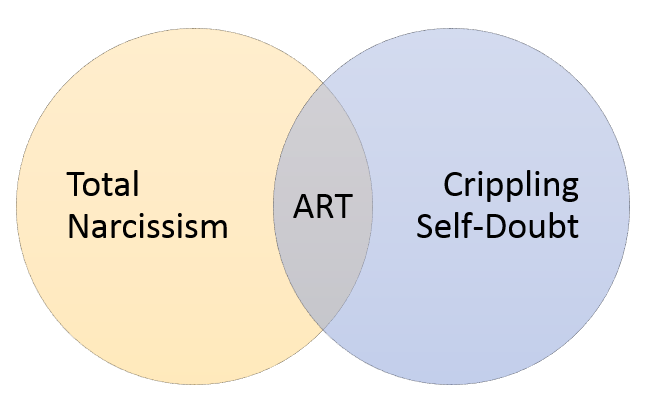
He started with this great reminder about why the self-editing process is hard:

ART

Then he set out to give us “a process to take our rough draft to the point of showing to agents or hiring a professional editor.” Of course, everyone has their own process, but I definitely plan to try this out, as it seems eminently usable and adaptable.

Foes of Editing

  1. Procrastination.
  2. The Inner Critic.

Why do we procrastinate? To avoid pain. Either we don’t want to admit that our writing is garbage, or we’re writing about something painful – or both! Well, your writing does need help, so you might as well get down to it. Hopefully with a process to follow, editing will seem less painful. For #2, try to redirect your Inner Critic to fix problems instead of making value judgments. Practice makes perfect!

Stages of Editing

  1. Relax until you don’t hate the sight of your manuscript. Go on vacation. Brainstorm another novel. Clean all the rooms in your house that went untouched while you were drafting. Give it at least a week.
  2. Read your manuscript. Actually read the whole thing. Try it in a different format, preferably one that’s hard to edit (print and bind it, or send it to your favorite e-reader). Figure out what you were trying to say (theme, character arc, etc.).
  3. Restructure. This time when you read it, write down every change you want to make (in another notebook or document referencing scenes or chapters, not page numbers). Don’t make any changes yet! These changes can be anything from “Look up whether they had longbows in 1204 AD” to “So-and-so is a lame character and we need to make him cooler.” Then, and this was the big one for me, order and categorize all of those changes, from largest to smallest. No sense polishing the prose in a scene you’re going to delete! Go through the changes, starting with the largest, and fix your manuscript one note at a time. Repeat until you get to the bottom of the list.
  4. Rewrite. Maybe, if your prose is pretty good, you can give it to beta readers before step 4 to double-check your structure. [I do this by sending an outline to beta readers, but I usually write the outline after steps 1-3. 🙂 –Ed.] Return to step 1 until you’re happy with the story.
  5. Refine. These are the miniscule corrections – copyediting and perfecting your prose – that you want to do before showing to editors and agents. Repeat this step until it’s perfect. 😉

I can’t wait to attack my WIP with this process!

Tread-desk: Day 3

Posted on January 12, 2016 by Abigail Welborn

I have now used a treadmill desk (tread-desk) for three days, and I like it a lot more than I expected! If you’ve ever considered using one, I recommend trying it out. Here’s what I like and dislike, as well as some additional considerations.Yep, I always look this put-together while working. And my desk is always this clean.

Awesome:

  • The biggest benefit was actually something completely unexpected: walking keeps me awake! My writing time is usually during my sons’ naptime in the afternoon or after they go to bed, at both of which times I’m usually just as tired as they are. Tea (black tea is my caffeine of choice) only goes so far. But it’s a lot harder to fall asleep while you’re walking.
  • It’s not that hard to adapt. I had been standing on my treadmill for a long time before I worked up to turning it on (I know, I know), but I’d say it took me maybe 30 minutes to get used to typing while I stand up and maybe another 30 minutes to find the right speed to walk at.
  • Walking is pretty much the best thing you can do for your body and your brain, so to be able to do it while writing is amazing.
  • My posture is better – or rather, it would be if I could get my monitor high enough; but walking, I notice that I’m slumping and am more motivated to fix it.

Drawbacks:

  • Treadmills take up more space than a desk. Mine extends about 2 feet farther behind me than a chair would.
  • You have to figure out how to get all your stuff elevated. I didn’t want to buy a standing desk right away, since they’re expensive and I didn’t know if I would like it, so I bought a keyboard stand and put my monitor on boxes. If you’re usually on a laptop anyway, it’s relatively easy to find laptop stands. It still feels like a kludge (because the monitor and keyboard vibrate ever so slightly as I type and walk), so as soon as I can afford it, I’m going to buy a better standing desk (since I now know I like it).
  • Walking in place is slightly disorienting in a way that walking forward is not. I develop “sea legs” while I’m walking, but then I feel like a landlubber for a minute or two after I get off.
  • It’s noisier. My treadmill itself is actually pretty quiet just running, but my walking on it causes lots of extra creaking. I didn’t notice until I realized I had to turn up my music to hear it over the sound of my walking. I like to write in silence sometimes, but then, I also fell asleep in my chair sometimes, so this is, overall, an improvement.

Other considerations:

USE THE SAFETY CLIP. You don’t want to be the one about whom someone else writes a cautionary tale. I drape mine over my keyboard when I get off so that I don’t forget to put it back on.

The treadmill. With a tread-desk, you want a treadmill designed to go at a leisurely pace for hours on end. Most fitness treadmills can go faster, adjust incline, etc., but don’t have a motor designed to run for hours at a time. LifeSpan is the gold standard for tread-desks and that’s reflected in the price, but if you get serious about it, invest in the real deal. (I bought mine used for half the price, and I have no affiliation with the company, financial or otherwise.) Of course, if you just want to try out this crazy idea, then by all means start with a fitness treadmill. Go find someone selling off last year’s New Year’s resolution at a garage sale, zip-tie a lapdesk to it, and away you go.

Shoes. I hate wearing shoes in the house, just as a general rule. House-shoes are a nod to necessity in the winter, but otherwise it’s bare feet all the time. I’ve used bare feet and sock feet on the treadmill, but it just works better in trainers.

Speed. My treadmill defaults to 0.4 mph (and, annoyingly, reverts back to that every time I pause). That was so slow I almost tipped over. Just like a bicycle needs to be going a certain minimum speed to keep its balance, so do my legs. That was unexpected. I landed on 0.9 mph as being fast enough to walk comfortably (the “museum shuffle” is actually painful to my knees) slow enough not to break a sweat and keep my hands steady on the keyboard. You have to walk for 3-4 minutes at a speed before you get a feel for it.

Ergonomics. Make sure your elbows are bent at a 90º angle when your hands touch the keyboard, and your wrists should bend down very slightly. (Although we all do it, our wrists should not rest on the table/keyboard tray, but should be held up as if they were playing a piano.) The top of your monitor should be just above eye-level so that you don’t have to bend your head down to look at any part of the screen. You might not notice sitting down, but when I do that while walking, my neck does get a little sore. Note that this means when calculating desk/keyboard height, you have to add in the standing height of the treadmill.

Coffee cups. I’m not a sure-handed drinker under any circumstances. I’m so paranoid about spilling that I’ve switched to travel mugs and reusable water bottles for my beverage intake. And you’re walking, so you should drink more water. 🙂

Soundtrack today: Sarah Brightman’s Symphony.
Making S.M.A.R.T. resolutions

Posted on December 31, 2015July 3, 2016 by Abigail Welborn

It’s almost 2016! How did this happen?!

I was thinking over possible New Year’s resolutions and, as usual, bemoaning that I haven’t achieved any of my writing goals yet. My dear husband asked, “Well, when will you be done? How can you break this up into small steps and turn them into a list you can check off?” (We are both engineers, so half of me loved this question.) The writer half of me was like, “That’s just not how it works!”

However, we did figure out that you can set lots of goals for Butt In Chair time. Coincidentally, creative output always and only follows BIC time, so ensuring the latter is pretty much the only way to (eventually) ensure the former. Hence, I am making BIC goals. But they should also be SMART goals. So, for your edification, and to provide some public accountability, here is my goal:

  • Specific: I will spend 8 hours a week doing actual plot work on my story (brainstorming, outlining, drafting, or editing).
  • Measurable: I will put a gold star on my calendar page for every hour thus spent, so that I can count them at the end of the week.
  • Attainable: As previously discussed, outcome measurements in creative work are demoralizing. But there is nothing that can prevent me from sitting down. (Or walking; I have a tread-desk.)
  • Realistic: I work three days a week, so between my two days off (during which I also do a fair amount of self-care, errand-running, and housework) and a few hours of naptime or in the evenings, 8 hours is realistic at this point in my life. Of course I wish it was more, but this is the minimum. And if I get past 8 hours? Gold star! 😉
  • Timely: Every week. Forever. (Yes, you’re supposed to kind-of time-box the goals, but again, the thing about outcome measurement being demoralizing.) The weekly nature fits in well with human psychology and will allow me to create carrots and/or sticks to ensure that I do this.

Edgy Inspirational Fiction (PNWA 2015 session round-up)

Posted on September 18, 2015September 18, 2015 by Abigail Welborn

This session was a surprisingly fun and interactive presentation from J.D. DeWitt. I wasn’t sure exactly what to expect, but it ended up being a great advice and encouragement session for Christian authors.

She started with the basics, which was good, because I’m not too familiar with the world of faith-based publishing. Until recently, it was mostly dominated by the Christian Booksellers Association, or CBA, whose extremely strict guidelines governed the content of “Christian fiction” (i.e., what you might find at CBD or Lifeway bookstores). The guidelines include: no mention of sex, drugs, or abuse; Christian characters may not drink, play cards, or gamble; etc. Even poop is off the table! It makes sense, though, if you consider that a Lifeway store has to be able to sell to someone from any denomination, so basically anything that any Christian might find offensive is not allowed. (I’m sure some readers still found ways to get offended, but there you go.) While there is and has been a large market for such clean books, DeWitt wants authors to know that there is a growing market on the edges of the CBA guidelines that is hungry for something a little more authentic.

Terminology:

  • “Christian fiction” follows the CBA guidelines and readers expect God to be at the center of the romance and the restoration in the plot
  • “inspirational fiction” or “inspi” would be sweet, feel-good, faith- and family-oriented, but not necessarily specifically Christian as defined above
  • “sweet romance” or “clean reads” doesn’t mention God but would be otherwise safe for readers of the above
  • new genre “transformational fiction” deals with tough issues, may be gritty or edgy, and invites the reader to journey with the character through (duh) transformation, with restoration still expected at the end
  • “gritty” means some level of violence
  • “edgy” means some level of sensuality

The main question on the table was whether “gritty” or “edgy” had a place in faith-based fiction. A poll of readers and published authors shows that indeed there is a strong market for it, but that the market is currently being served mostly by self-published writers. Large publishers want the large distribution power of the CBA, and thus are limited to their guidelines. Secular publishers don’t know how large the underserved market might be and don’t want to publish anything risky. Research shows that Christian fiction readers read more books than the average reader in the US, and that they are running out of titles that hold their interest. (If you have a faith-based thriller, DeWitt wants to talk to you!! 🙂 ) The downside of self-publishing is that anyone can label their stuff with any of the above tags, so it’s up to readers and reviewers to help people.

DeWitt’s takeaway: write for this market if it appeals to you as a writer. There are readers out there, and when the big publishers “discover” that, you want to be there already. 🙂

MG or YA? How do you know? (PNWA 2015 session round-up)

Posted on September 15, 2015September 15, 2015 by Abigail Welborn

Saturday morning, the last main day of the conference, was the earliest start time of all—8 am! Attendance at all the first sessions was pretty light, but we had a great time at the “Elements of Young Adult and Middle Grade,” a panel discussion with two authors (Janet Lee Carey and Brian Mercer) and two agents (Roseanne Wells and Shannon Hassan). After we woke up a bit, anyway. 🙂

We started off with the very basic question: okay, how do you differentiate Middle Grade from Young Adult, both of which used to be lumped together with “children’s”? The answer has a lot of nuance, but also some pretty basic differences.

Middle Grade Young Adult
Length of book 30-50K words 50-70K words (speculative fiction on the longer end; an established series writes its own rules)
Age of reader 8-12 years 13-18
Age of main character (readers tend to “read up”) 10-13 14-18
Life stage Lots of time at school, still “ruled by adults,” highly involved with family of origin Especially with older characters, getting ready to leave home, dealing with authority, open to romance and sex
Main character arc (not the only one, obviously) Mostly external, sense of going out into the world and righting a wrong Mostly internal, finding an identity, purpose and place in the world

Then we talked about one of the sticky questions: what’s acceptable for sex in YA? The older the main character, the fewer restrictions; there are huge differences between 14- and 18-year-olds, both as readers and as characters. Some publishing houses have specific guidelines, and agents often defer to them. You can make a book feel intense without being explicit (e.g., Speak). MG books are much more sensitive to language, violence and sex because parents are still the main gatekeepers of what their kids read.

Finally we talked about voice, and how it can’t be “taught” but you can pick up an ear by listening to kids and reading popular books. First person is obviously very popular in YA, but if it’s bogging down your narrative, don’t be afraid to do something else. Always do what’s best for your story.

  • Previous
  • 1
  • 2
  • 3
  • 4
  • 5
  • 6
  • Next
  • Bluesky
  • Instagram

Latest Thoughts

  • Why We Need WNDB
  • What the world needs now
  • Are you ready to be a mentee?
  • Why Maternal Health Matters to Me (#2)
  • Why Scrivener is great for Nanowrimo

Categories

Word Association

AMM author life bio birth story business of writing caffeinateme career controversies copyedit me craft creative process deadline editing excel formatting freedom goals grammar inspiration LOTR market Mary Pearson meta Microsoft Word Mighty Pens NaNoWriMo never give up panic pitching PitchWars pnwa60 productivity querying retreat retrospective; RevPit Scrivener setting star wars story structure technology the ONE thing treaddesk WNDB word count

Meta

  • Log in
  • Entries feed
  • Comments feed
  • WordPress.org
© 2026 Abigail Welborn | Powered by Minimalist Blog WordPress Theme